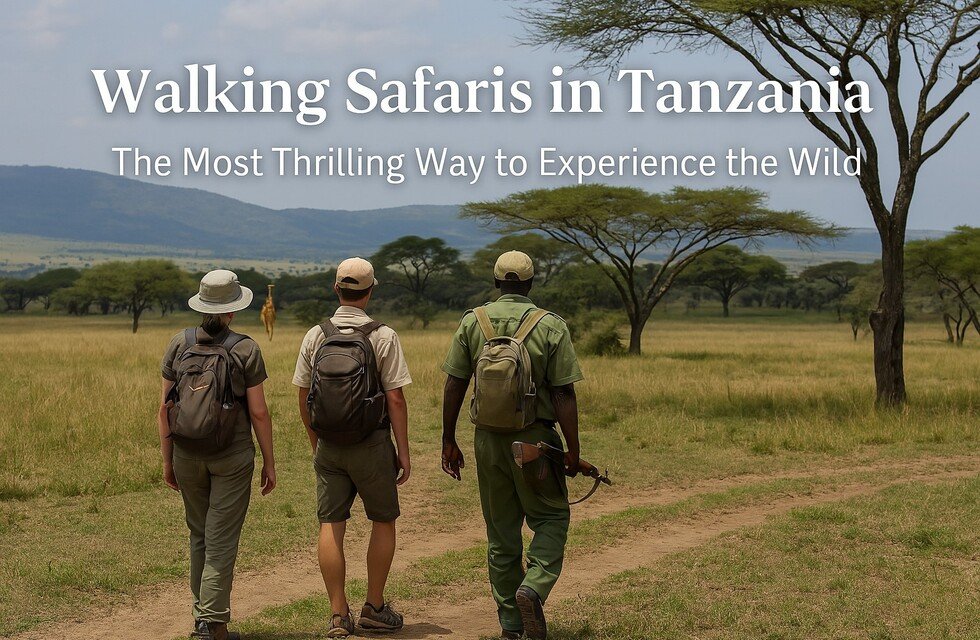
Walking Safaris in Tanzania: The Most Thrilling Way to Experience the Wild
When you think of an African safari, the image that likely comes to mind involves a 4×4 vehicle bouncing across the savannah while you gaze out at herds of elephants or spot a lion lounging in the grass. But what if there was a way to immerse yourself even deeper into the wild? To truly become part of the landscape rather than just an observer from behind a window?
Enter the walking safari.
In Tanzania, walking safaris are fast becoming one of the most thrilling and intimate ways to connect with nature. They strip away the barriers between you and the wild, bringing you closer not just to animals, but to the land itself. The rustle of the grass, the call of distant birds, the excitement of a fresh footprint—it all becomes real when you’re exploring on foot.
What Is a Walking Safari?
A walking safari is exactly what it sounds like: a guided walk through the African bush. Instead of sitting in a vehicle, you’re led by experienced and armed guides who take you on foot through areas teeming with wildlife. It’s not about chasing big game; it’s about slowing down, tuning in, and experiencing the wild in a way that engages all your senses.
Why Choose a Walking Safari in Tanzania?
Tanzania is home to some of Africa’s most breathtaking and diverse landscapes. From the iconic Serengeti plains to the baobab-filled terrain of Tarangire and the dramatic escarpments of Lake Natron, each region offers a different kind of walking safari experience.
Here’s why Tanzania stands out:
-
Untouched wilderness areas: Many walking safaris take place in less-touristed parts of Tanzania’s national parks and private reserves.
-
Expert guides: Tanzanian walking guides are highly trained in bushcraft, animal behavior, and safety.
-
Cultural immersion: Some safaris combine walking with cultural visits to Maasai or Hadzabe villages.
-
Freedom and flexibility: Unlike game drives, walking safaris let you explore places vehicles can’t reach.
Where Can You Go for a Walking Safari in Tanzania?
While not all areas of Tanzania allow walking safaris (due to park regulations or predator density), several places offer outstanding on-foot experiences:
1. Serengeti National Park (Private Concessions)
Most people know Serengeti for the Great Migration and iconic game drives, but some private areas within the park offer walking safaris. Here, you can follow in the footsteps of wildebeests and zebras while your guide points out animal tracks, insect behavior, and plant uses.
2. Tarangire National Park
Tarangire is known for its massive elephant population and dramatic baobab trees. In certain areas, you can leave the vehicle behind and walk through valleys and open plains. Expect to see giraffes, zebras, and maybe even elephants—from a safe distance, of course.
3. Lake Manyara National Park
This park offers a more lush, forested setting. Walking safaris here are great for birdwatchers and those interested in botanical aspects of the ecosystem. The escarpment views are also incredible.
4. Ngorongoro Highlands & Empakaai Crater
While walking inside the Ngorongoro Crater is not allowed, you can explore the highlands around it, including a hike down into the stunning Empakaai Crater. Flamingos wade through the soda lake inside, and the surrounding forests are home to monkeys and exotic birds.
5. Lake Natron Area
This remote, rugged landscape offers a real sense of adventure. Walking here is less about big game and more about surreal scenery—crimson-colored lakes, volcanic formations, and Maasai communities. It’s an off-the-beaten-path treasure.
6. Ruaha and Selous (Nyerere National Park)
In Southern Tanzania, these parks offer the most authentic walking safari experiences. Selous (now Nyerere) is one of the largest game reserves in Africa, and its remote character allows for walking safaris far from the crowds.
What to Expect on a Walking Safari
A typical walking safari begins early in the morning when the temperatures are cooler and animals are more active. Your group will usually be small—just a few people, a lead guide, and an armed ranger for safety.
Here’s what your experience might include:
-
Tracking animals: Learn how to identify tracks, droppings, and scratch marks that hint at recent animal activity.
-
Botanical knowledge: Discover how local plants are used for food, medicine, or survival.
-
Birdwatching: Spot colorful and rare birds with the help of your guide’s trained eyes.
-
Insect life and ecosystems: Understand the intricate web of life, from termites and dung beetles to the symbiotic relationships among animals.
-
Safe distance observation: You may encounter animals like giraffes, zebras, antelope, or even elephants, but guides ensure safety at all times.
Is It Safe?
Yes—walking safaris are safe when done with reputable guides. All guides are trained in wilderness survival, animal behavior, and safety protocols. You’ll typically be accompanied by an armed ranger, and safety briefings are given before the walk begins.
That said, this is the wild. There are no fences, no guarantees. That’s exactly what makes it exhilarating. You’re part of the food chain—albeit under expert supervision.
Tips for Your First Walking Safari
If you’re considering a walking safari in Tanzania, here are some practical tips:
-
Wear neutral-colored clothing (khaki, olive, brown) to blend in with the environment.
-
Comfortable walking shoes are a must—light hiking boots or trail shoes.
-
Bring a hat, sunglasses, and sunscreen to protect against the sun.
-
Carry minimal gear—just water, a camera, and binoculars if you have them.
-
Stay quiet and follow the guide’s instructions at all times.
The Emotional Experience of Walking in the Wild
There’s something transformative about being on foot in Africa. When you’re walking through tall grass, your senses are heightened—you hear more, smell more, feel more. A walking safari strips away the noise of modern life and reconnects you with nature at its purest.
You’re not watching a show from the sidelines—you’re in it.
Why It’s Worth Adding to Your Safari Itinerary
If you’re planning a traditional safari in Tanzania, consider adding a walking safari to your itinerary. It provides a completely different perspective than what you’ll get from game drives and enriches your appreciation for the landscape.
Whether it’s just a couple of hours walking along a riverbed or a multi-day bush walk with mobile camps, the experience is unforgettable.
Final Thoughts
A walking safari in Tanzania is more than just an adventure—it’s a reminder of our deep, ancient connection with the wild. It teaches patience, respect, and attentiveness. It invites you to slow down, observe, and truly absorb the soul of the African bush.
So if you’re seeking more than just sightings—if you crave real connection, intimate experiences, and thrilling encounters—then lace up your boots.
The wild is waiting, one step at a time.
All Categories
Recent Posts
Top 10 Wildlife Encounters You Can’t Miss on a Tanzanian Safari
Hidden Wildlife Gems: Lesser-Known Parks Worth Visiting in Tanzania